The safety and longevity of any structure fundamentally depend on its foundation. A well-designed and carefully placed foundation ensures stability, prevents costly failures, and safeguards lives. Throughout history, architects and engineers have recognized that strategic placement of structural elements is vital—whether in ancient civilizations or modern urban planning. Today, innovations like My Sweet Town exemplify how thoughtful planning creates resilient communities built on solid principles.
Table of Contents
Understanding Structural Foundations: The Basics of Stability
Foundational elements are the bedrock of any structure. They include footings, piles, slabs, and basements that transfer loads from the building to the ground. Properly designed foundations distribute weight evenly, preventing uneven stress that can cause settlement or collapse. Conversely, inadequate or improperly placed foundations can lead to severe failures, such as cracking walls, uneven floors, or full structural failure.
The science behind weight distribution emphasizes that support must be aligned with the load’s center of gravity. For example, in high-rise construction, strategic placement of core supports and shear walls ensures stability against lateral forces like wind or earthquakes. When foundational elements are misplaced or insufficient, the entire structure becomes vulnerable to shifting and eventual failure.
Principles of Strategic Placement in Construction
Strategic placement affects a building’s load-bearing capacity and overall resilience. Key principles include:
- Load Distribution: Placing heavy structural elements directly over stable soil or deep piles reduces the risk of uneven settling.
- Balance and Symmetry: Symmetrical placement of supports ensures even load transfer, minimizing stress concentrations.
- Redundancy: Overlapping load paths provide safety margins in case of localized failure.
Poor placement—such as positioning supports on unstable soil or neglecting load paths—can result in catastrophic failures. For example, the collapse of the Tacoma Narrows Bridge in 1940 highlighted how flawed placement and inadequate understanding of dynamic forces lead to disaster.
Controlled Demolition: An Extreme Example of Strategic Collapse
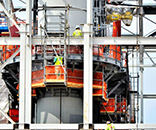
Controlled implosions demonstrate the power of precise placement. Demolition experts carefully plan where to place explosives to cause a building to collapse inward safely. This technique relies on understanding the structure’s load paths, weak points, and how to alter support at specific locations.
The success of a controlled demolition depends on meticulous planning—each explosive charge positioned to weaken the support structure at exact points. This process offers lessons for construction: understanding how placement influences stability can help engineers design safer, more durable buildings from the outset.
Applying Strategic Placement in Modern Architectural Design
Contemporary architecture increasingly emphasizes innovative placement to enhance resilience. Examples include skyscrapers with core supports aligned to resist lateral forces and modular designs that adapt to environmental conditions. Advanced technology, such as building information modeling (BIM) and structural simulation software, allows planners to visualize and optimize placement before construction begins.
Modern projects like My Sweet Town showcase how strategic placement of residential and communal structures creates a community resilient to environmental stresses and structural challenges. Thoughtful planning ensures that every building contributes to the overall stability and safety of the neighborhood.
Historical and Cultural Perspectives: The Origin of Structural Strategies
Ancient civilizations prioritized placement to achieve stability without modern tools. The Romans, for instance, used precise measurements and placement of arches and supports to build enduring structures like aqueducts and amphitheaters. Their understanding of weight transfer and support placement laid the groundwork for modern engineering.
A fascinating cultural artifact illustrating the importance of design and placement is the candy cane. Originating in Germany around 1670, their shape—the curved hook and striped pattern—symbolizes careful structural design. While playful, the candy cane’s form demonstrates how thoughtful placement of elements can influence both function and symbolism, echoing the principles of structural stability.
Non-Obvious Factors Influencing Structural Integrity
Beyond basic placement, several less apparent factors impact structural health. Environmental conditions such as soil type and weather patterns influence foundation stability. For example, clay soils expand and contract with moisture, requiring special foundation considerations.
Material properties also matter: steel’s ductility and concrete’s curing process depend on precise placement and handling. Human factors—craftsmanship, planning accuracy, and adherence to design—are equally vital. Errors in placement or material application can compromise entire structures, regardless of initial design excellence.
The Interplay Between Design, Placement, and Longevity
Strategic placement extends the lifespan of buildings by reducing wear and preventing early deterioration. Long-lasting structures like ancient temples or modern bridges demonstrate how meticulous planning and placement withstand environmental and mechanical stresses over centuries.
In My Sweet Town, community planning emphasizes not only aesthetic appeal but also the strategic placement of utilities, supporting infrastructure, and residential areas to foster resilience and longevity. This approach highlights how thoughtful design and placement are intertwined with community sustainability.
Building a Safer Future Through Strategic Foundations
« A strong foundation isn’t just about materials, but about the precise placement of support—an insight that guides both ancient builders and modern engineers. » – Expert in Structural Engineering
In conclusion, the importance of strategic placement in construction cannot be overstated. It influences safety, durability, and community resilience. As we advance technological capabilities, integrating these timeless principles with innovative tools ensures that future structures are safer and more durable. Educating future builders and planners on these core concepts is essential to prevent failures and promote sustainable development.